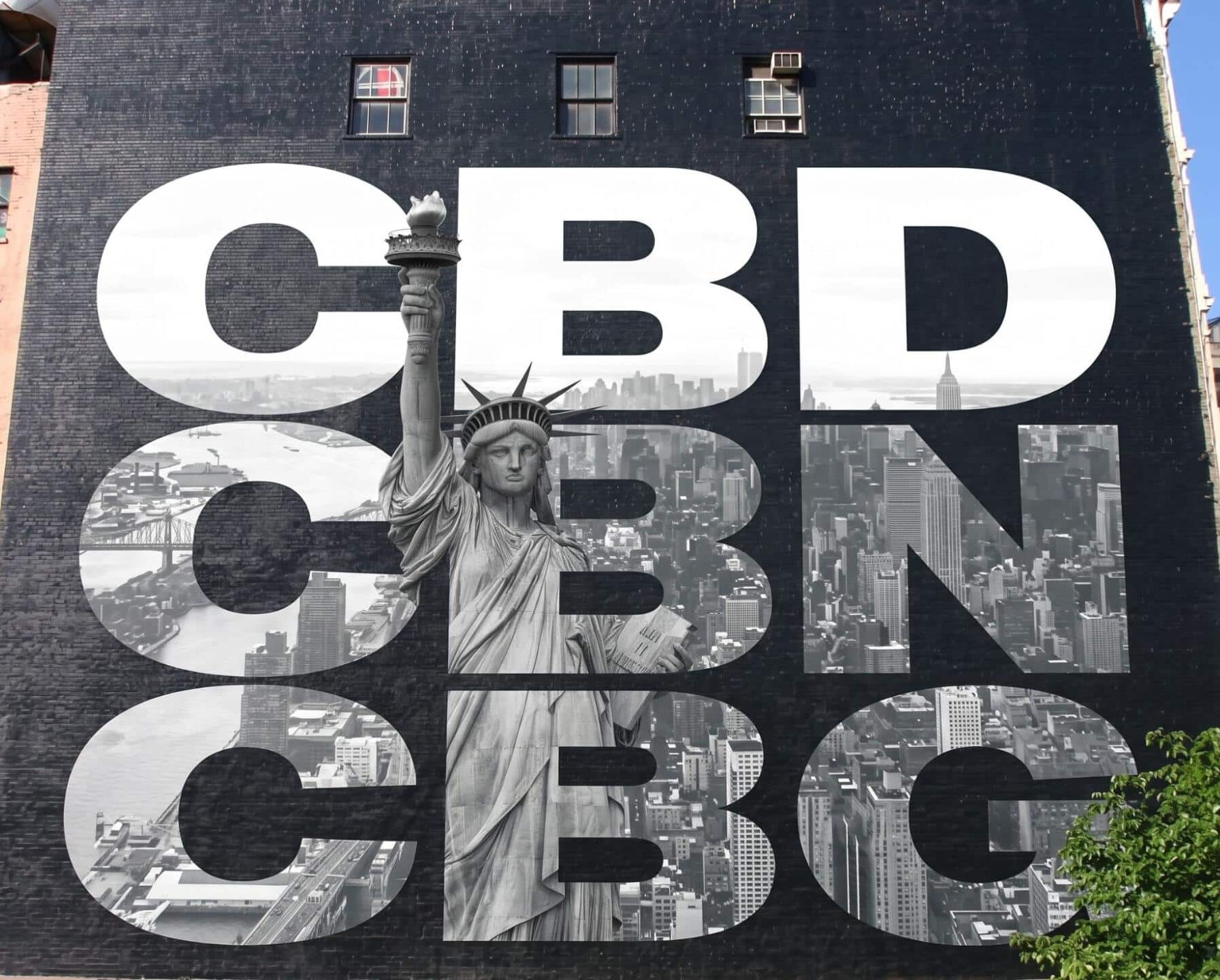
Understanding the complex chemical ecosystem of Cannabis sativa is essential for modern consumers navigating dispensary shelves across New York City. Beyond simple THC percentages, the plant’s true power lies in its full spectrum of major and minor cannabinoids that shape every high, calm, and recovery session. Often, labels will show TAC levels that reflect the total active cannabinoid levels in the plant you are about to consume. Higher TAC percentage levels often indicate a more robust plant profile and excellent cured finish. With over 100 cannabinoids, we cover the 10 most common found in cannabis.
1. Delta-9-Tetrahydrocannabinol
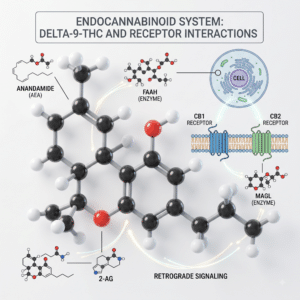
Primary Effects & Biological Mechanism: Delta-9-THC is the principal psychoactive driver in cannabis. It acts as a partial agonist at the central nervous system’s CB1 endocannabinoid receptors, triggering dopamine release and altering sensory perception. Consumers experience intense euphoria, tactile amplification, pain modulation, and appetite stimulation. In high doses, it can alter time perception and induce deep couch-lock or heightened anxiety if unbalanced by calming terpenes.
Top Cultivars & High-Yield Strains:
- Sour Diesel: The iconic East Coast sativa staple delivering sharp diesel aromas and an energetic cerebral rush.
- Godfather OG: Frequently testing near 30%+ THC, this indica-heavy hybrid offers heavy physical sedation.
- Gorilla Glue #4 (GG4): A resinous hybrid known for euphoric cerebral effects coupled with full-body lock.
2. Cannabidiol (CBD)
Primary Effects & Biological Mechanism: Non-intoxicating and universally recognized for wellness, CBD acts as a negative allosteric modulator of the CB1 receptor. This means it physically alters the receptor shape, dampening the potential panic or racing thoughts caused by high THC doses. CBD also stimulates 5-HT1A serotonin receptors and TRPV1 pain receptors, delivering non-drowsy stress reduction, anti-inflammatory relief, and systematic bodily ease.
Top Cultivars & High-Yield Strains:
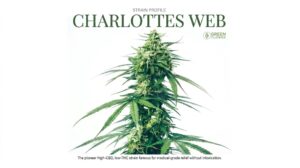
- Charlotte’s Web: The pioneer high-CBD, low-THC strain famous for medical-grade relief without intoxication.
- ACDC: A high-cannabidiol phenotype with a CBD-to-THC ratio often reaching 20:1, exceptional for daytime pain relief.
- Sour Space Candy (Hemp): A flavorful hemp cultivar loaded with CBD and sour berry terpenes for evening calm.
3. Cannabigerol (CBG)
Primary Effects & Biological Mechanism: CBG is crowned the “mother of all cannabinoids” because its acidic precursor, CBGA, is the foundational building block that converts into THCA, CBDA, and CBCA during plant growth. Non-intoxicating CBG interacts directly with CB1 and CB2 receptors while acting as an alpha-2 adrenergic agonist. Users report smooth mental focus, crisp cognitive clarity, reduced gut inflammation, and potent antibacterial qualities.
Top Cultivars & High-Yield Strains:
- Jack Frost CBG: Bred specifically to maximize CBG trichomes, producing frosty white buds with almost zero THC.
- White CBG: A popular hemp strain featuring chalky-white resin heads boasting up to 15-20% pure CBG.
- Matterhorn CBG: An industrial hemp cultivar optimized for high CBG yields and crisp lemon-pine aromatic profiles.
4. Cannabinol (CBN)
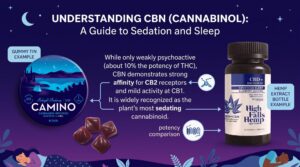
Primary Effects & Biological Mechanism: CBN is a natural byproduct created when Delta-9-THC degrades over time due to heat, light, and oxygen exposure. While only weakly psychoactive (about 10% the potency of THC), CBN demonstrates strong affinity for CB2 receptors and mild activity at CB1. It is widely recognized as the plant’s most sedating cannabinoid, operating synergistically with myrcene to ease insomnia, relax tight muscles, and promote long-lasting restful sleep.
Top Cultivars & High-Yield Strains:
- Aged Granddaddy Purple: Cured indica flower that has naturally converted portioned THC into high CBN content.
- Purple Kush (Aged Cures): Heavy indica strains allowed to cure long-term, maximizing CBN for nighttime use.
- Super Green Crack (Cured): Yields moderate CBN levels when harvested late in the flowering cycle.
5. Tetrahydrocannabivarin (THCV)
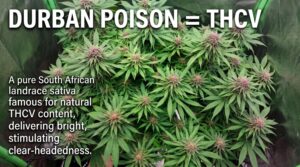
Primary Effects & Biological Mechanism: Nicknamed “diet weed” across modern cannabis culture, THCV features a shorter propyl side-chain compared to THC’s pentyl chain. At low doses, THCV functions as a CB1 antagonist, meaning it actually blocks THC from triggering appetite centers, suppressing the “munchies.” At higher doses, it switches to a CB1 agonist, producing a clean, fast-acting, functional high characterized by sharp mental stamina and physical energy.
Top Cultivars & High-Yield Strains:
- Durban Poison: A pure South African landrace sativa famous for natural THCV content, delivering bright, stimulating clear-headedness.
- Doug’s Varine: Specially bred to test remarkably high in THCV, providing intense cerebral energy.
- Pink Boost Goddess: A California-bred strain cultivated for floral aromas and elevated THCV percentages.
6. Cannabichromene (CBC)
Primary Effects & Biological Mechanism: Although non-intoxicating, CBC is one of the most vital minor cannabinoids in full-spectrum formulations. CBC does not bind efficiently to CB1 or CB2 receptors; instead, it interacts with TRPV1 and TRPA1 receptors, which regulate pain transmission. Most importantly, CBC inhibits the breakdown of anandamide—the body’s natural “bliss molecule”—allowing internal endocannabinoids to circulate longer, elevating mood, and supporting brain cell growth (neurogenesis).
Top Cultivars & High-Yield Strains:
- 3 Kings: A powerhouse cross of Headband, Sour Diesel, and OG Kush that regularly exhibits elevated CBC levels.
- Maui Dream: A sativa-dominant hybrid that pairs uplifting cerebral high notes with notable CBC content.
- Cherry Wine (Hemp): High-CBD hemp flower rich in natural minor cannabinoids, including impressive CBC traces.
7. Cannabidivarin (CBDV)
Primary Effects & Biological Mechanism: CBDV is a non-intoxicating homolog of CBD with a modified molecular structure. It interacts dynamically with TRP channels, particularly TRPV1 and TRPV2, influencing how nerves process signals. Clinical research highlights CBDV for its anticonvulsant qualities, anti-nausea properties, and ability to relieve deep physical discomfort without producing any mental cloudiness.
Top Cultivars & High-Yield Strains:
- Auto CBD-Victory: A specialized cultivar developed to produce an even 1:1 ratio of CBDV to CBD.
- Forbidden V (Hemp): An exotic hemp strain featuring loud tropical gujava aromas and high CBDV content.
- Pine Walker (Hemp): A pinene-rich hemp cultivar praised for calm mental focus and dense CBDV resin output.
8. Delta-8-Tetrahydrocannabinol (Delta-8-THC)
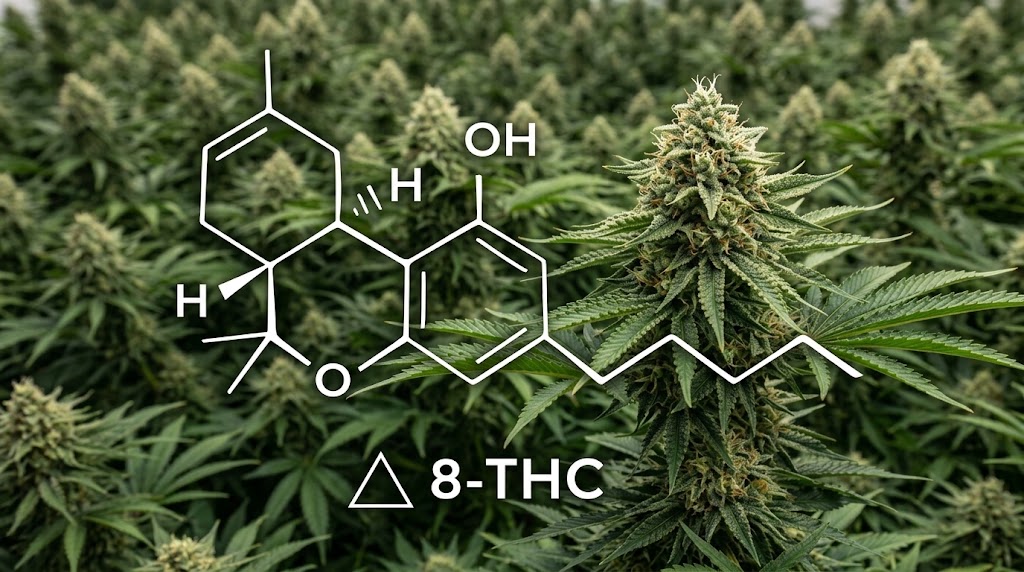
Primary Effects & Biological Mechanism: Delta-8-THC is a structural isomer of Delta-9-THC, differing only by the location of an atomic double bond (on the 8th carbon chain rather than the 9th). It binds to CB1 receptors in the brain with roughly 50-70% of the affinity of Delta-9. The result is a smooth, highly manageable psychoactive experience characterized by body relaxation, enhanced appetite, and significant physical relief, with a drastically reduced likelihood of anxiety or paranoia.
Top Cultivars & High-Yield Strains:
- Delta-8 Infused Bubba Kush: Premium indica hemp flower infused with pure Delta-8 distillate for heavy physical relaxation.
- Delta-8 Skywalker OG: A hybrid formulation combining sharp pine-gas terpenes with balanced Delta-8 bliss.
- Special Sauce (Delta-8 Cured): CBD-rich flower enhanced with Delta-8 for mild, clear-headed euphoria.
9. Tetrahydrocannabinolic Acid (THCA)
Primary Effects & Biological Mechanism: THCA is the non-psychoactive raw precursor found abundantly in living, unheated cannabis trichomes. In its unheated state, the bulky carboxylic acid group prevents THCA from fitting into CB1 brain receptors, meaning juicing or consuming raw flower will not get you high. Instead, raw THCA offers anti-inflammatory and neuroprotective benefits. However, when exposed to heat (decarboxylation via smoking, vaping, or cooking), THCA loses its carboxyl group and instantly converts into potent psychoactive Delta-9-THC.
Top Cultivars & High-Yield Strains:
- Gelato #33: Features thick layers of raw THCA trichomes that instantly convert to high-potency THC when burned.
- GMO Cookies: Renowned for yielding up to 30%+ raw THCA prior to combustion, delivering pungent garlic-gas aromas.
- Ice Cream Cake: A sugary indica packed with THCA crystals designed for deep evening relaxation post-decarb.
10. Cannabidiolic Acid (CBDA)
Primary Effects & Biological Mechanism: CBDA is the raw, unheated form of CBD as synthesised by the living plant. Studies show that raw CBDA possesses significantly higher bioavailability and binds up to 100 times more effectively to 5-HT1A serotonin receptors than activated CBD. This makes CBDA an exceptional compound for curbing acute nausea, regulating mood stress, and combatting systemic tissue inflammation without high heating temperatures.
Top Cultivars & High-Yield Strains:
- Cannatonic: A classic high-CBD cultivar that delivers massive raw CBDA yields when harvested and kept raw or cold-extracted.
- Suver Haze (Hemp): An aromatic hemp variety containing elevated raw CBDA percentages alongside spicy caryophyllene.
- Harle-Tsu: A high-ratio medicinal strain optimized for clean raw juicing and raw tincture extractions.
The Entourage Effect: Why Spectrum Beats Isolation in NYC Lifestyle

For decades, commercial cannabis focused almost entirely on chasing raw Delta-9-THC percentages. However, modern NYC connoisseurs understand that isolated THC delivers a flat, one-dimensional experience. The true artistry of the plant lies in the Entourage Effect—the biochemical synergy achieved when major cannabinoids, minor cannabinoids, and aromatic terpenes work together.
When Delta-9-THC is paired with minor compounds like CBG or CBC, the psychoactive high becomes smoother and more balanced. Add terpenes like myrcene (which aids cannabinoid blood-brain barrier passage) or limonene (which elevates serotonin response), and the overall effect becomes targeted.
At Budega NYC, our curation team prioritizes full-spectrum profiles over raw numbers. A 22% THC flower rich in CBG, CBC, and beta-caryophyllene will consistently deliver a deeper, richer, and more memorable high than a 32% THC isolate stripped of its natural minors.
Navigating New York’s legal cannabis market means demanding total transparency, rich minor cannabinoid profiles, and genetics that deliver real results. Whether you are hunting for a high-THCV daytime sativa or a high-CBN indica for late nights in the city, matching the right cannabinoid profile to your lifestyle is the key to elevating your experience.